Sand table model: seeing heaven and earth in every inch, multi-dimensional empowerment reveals the true chapter
Sand table model: seeing heaven and earth in every inch, multi-dimensional empowerment reveals the true chapter
In today's era of digitalization sweeping across various industries, the sand table model, an ancient and intuitive tool, has not withdrawn from the historical stage. Instead, with its unique physical properties and spatial expression, it continues to play an irreplaceable key role in many fields. It is like a three-dimensional "encyclopedia" that condenses abstract concepts, grand plans, and intricate structures into small spaces, becoming an important bridge for communication, decision-making, presentation, and innovation.
1、 The 'Navigator' for Urban Planning and Construction
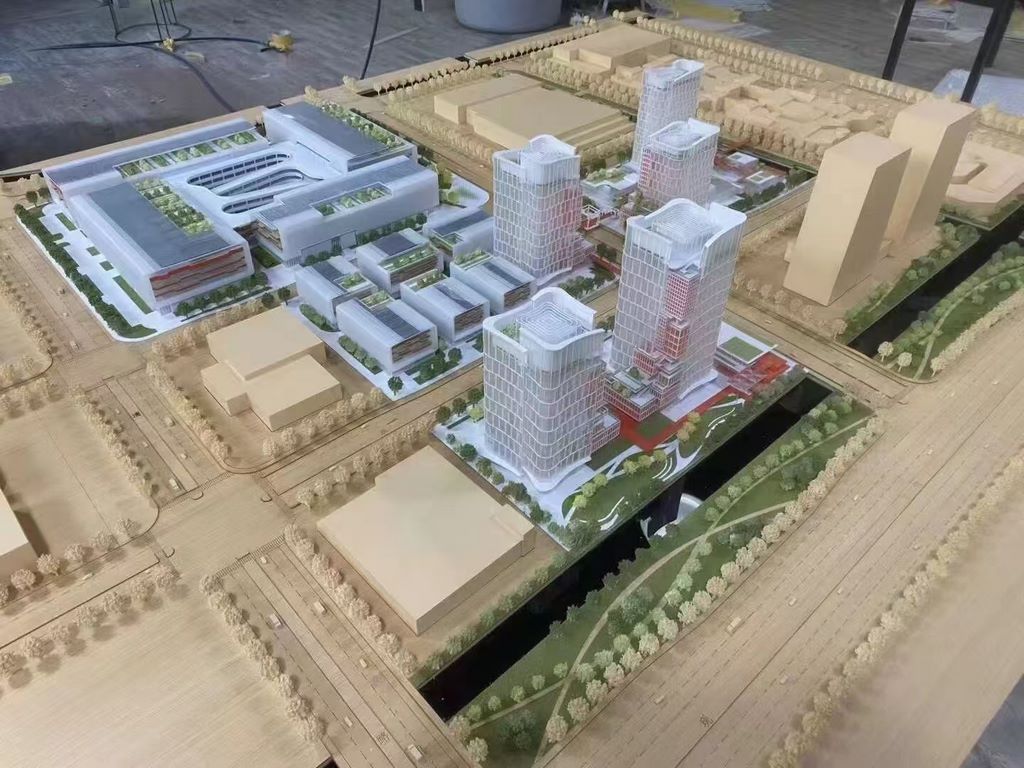
In the field of urban development and public utilities, the sand table model is the most intuitive preview of project blueprints. It transforms two-dimensional planning drawings into tangible three-dimensional entities, enabling decision-makers, investors, and citizens to clearly and comprehensively foresee the future appearance, functional layout, traffic flow, and coordination between buildings and the environment of the city. Whether it is the macro planning of new areas or the micro design of old city renovation, sand tables can highly integrate complex spatial relationships and information. Through it, the strategic vision of regional development can be concretely presented, which helps to brainstorm and optimize plans, effectively avoiding planning errors, and is an indispensable tool for ensuring scientific decision-making and building social consensus for large-scale public projects.
2、 The "three-dimensional language" of architectural design and scheme communication
For architects, sand table models are the best medium for refining designs, testing creativity, and communicating with all parties involved. It can intuitively display the individual form, group combination, spatial scale, light and shadow changes, and material texture of buildings, helping designers to examine and improve their creations from different perspectives. This is a tactile and spatial experience that pure virtual models cannot replace. When facing homeowners and review experts, an exquisite physical model can surpass complex technical drawings and become the most effective communication "language", allowing non professionals to quickly understand the design intent and final effect, greatly improving the efficiency and success rate of scheme reporting.
3、 The 'vivid classroom' of education, teaching, and cultural exhibitions
In the field of education and cultural communication, sand table models are highly attractive carriers. The terrain and landform models in geography class, the restoration models of civilization sites in history class, and the biosphere simulation sand table in ecology can all make abstract knowledge vivid and concrete, effectively stimulating learners' spatial imagination and exploration interest. In museums, science museums, and cultural heritage conservation, sand table models can systematically reproduce historical scenes, urban changes, or scientific principles, allowing audiences to travel through time and space in an intuitive experience, deepen understanding, and become irreplaceable visual teaching materials in science education and cultural inheritance.
4、 Visual Platform for Industrial Design and Emergency Management
In the complex industrial manufacturing field, sand table models are commonly used to display the structure of large equipment, factory layout, or process flow, helping engineers and technicians to clearly understand the connections between various links and optimize production lines. At the same time, in the fields of public safety and emergency management such as fire protection, earthquake resistance, flood control, etc., using sand table models for disaster simulation and rescue plan deduction can greatly improve the command and coordination ability and disposal efficiency for responding to emergencies, providing a crucial practical platform for protecting people's lives and property safety.
Conclusion
In summary, the sand table model goes beyond its physical properties as a simple "model" and is a comprehensive language that integrates spatial thinking, aesthetic expression, and practical functionality. In the era of information explosion, from macro planning to micro design, from knowledge transmission to security drills, sand table models continue to provide clear and powerful support for human planning, creation, learning, and decision-making with their irreplaceable intuitiveness, interactivity, and integrity. In the blink of an eye, insight into the whole picture is the true value of the sand table model that has withstood the test of time and remains charming.


