Urban Planning Model Scene Restoration
Introduction
An urban planning model is a living document.
It ages, fades, and becomes outdated.
But a full rebuild is expensive.
Scene restoration brings your model back to life.
It updates faded colours, replaces broken parts, refreshes landscaping, and realigns the layout.
That isUrban Planning Model Scene Restoration.
This guide explains how professionals restore sand table models.
What to restore versus what to replace.
And how to plan restoration as part of a long‑term maintenance strategy.
Let us begin.
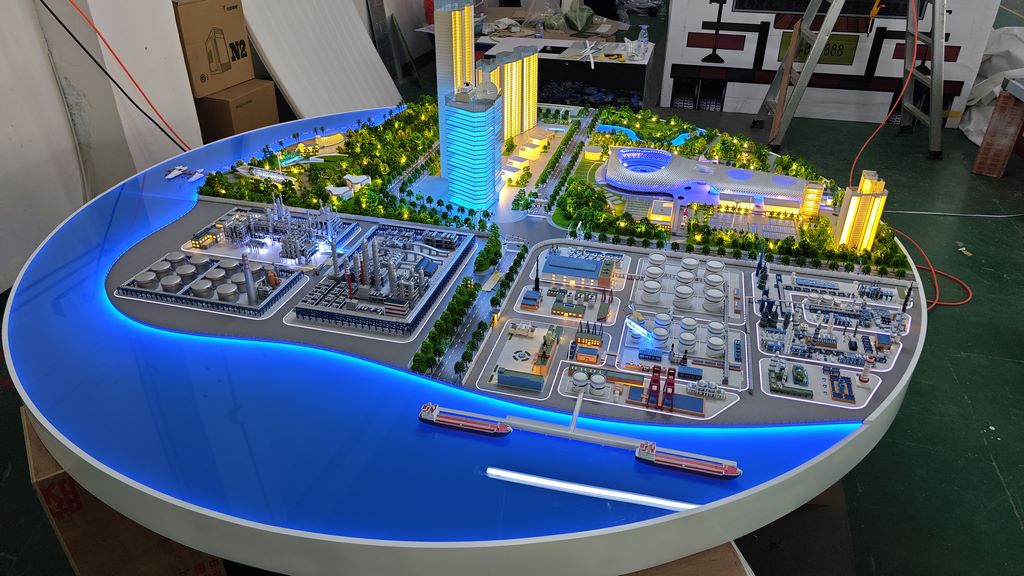
What Is Urban Planning Model Scene Restoration?
It is the comprehensive renewal of an existing sand table model.
Urban Planning Model Scene Restorationincludes:
Cleaning and surface preparation.
Repainting faded buildings, roads, and water features.
Replacing broken or missing trees, vehicles, and figures.
Recasting yellowed or cracked resin water.
Updating layout elements (new roads, buildings, or zones).
Replacing burnt‑out LEDs and rewiring lighting systems.
Unlike aSand Table Model Long Term Maintenance Plan(which focuses on preservation), restoration is intervention – bringing the model back to its original condition or updating it to a new vision.
When Does a Model Need Restoration?
Fading and Discolouration
After 5–10 years, UV exposure fades paints and yellows clear resins.
Restoration repaints and recasts these areas.
Physical Damage
Broken trees, cracked buildings, missing vehicles – accidents happen.
Restoration replaces damaged components.
Outdated Master Plan
The real‑world project has changed. New roads, different building locations, or revised zoning.
Restoration updates the model to reflect the current plan.
Lighting Failure
LEDs burn out, wiring corrodes, controllers malfunction.
Restoration includes fullSand Table Model LED Light Replacement.
Layout Inefficiency
The originalSand Table Model Exhibition Layout Designmay no longer suit new viewing angles or exhibition spaces.
Restoration adjusts the composition.
The Restoration Process Step by Step
Step 1 – Assessment and Documentation
A technician inspects the model and documents all damage, fading, and outdated elements.
They take high‑resolution photos and create a restoration plan.
Step 2 – Cleaning and Surface Preparation
The model is gently cleaned with compressed air and soft brushes.
Old loose flocking is vacuumed.
Resin water is removed if yellowed or cracked.
Step 3 – Component Replacement Planning
Missing or broken parts are identified.
If the original master files exist, new components are 3D printed or laser cut.
For ornate details, theArchitectural Model Mold Making Processmay be used to recreate decorative columns, cornices, or repetitive roofline elements from an original master part.
Step 4 – Repainting and Colour Matching
Faded areas are repainted to match original colours.
For large models, aSand Table Model Color Restoration Serviceensures seamless blending between old and new paint.
Step 5 – Landscape and Greening Refresh
Simulation Greening For Urban Sand Modelelements are restored:
Re‑flocking bare grass patches with electrostatic grass.
Replacing missing trees with hand‑crafted or molded replicas.
Adding new bushes and ground cover.
Step 6 – Water Feature Restoration
Yellowed or cracked resin water is removed.
New clear or tinted epoxy is poured in layers.
Fibre optic riverbeds or LED sub‑water lights are reinstalled.
Step 7 – Lighting System Overhaul
Burnt‑out micro‑LEDs are replaced.
Corroded wires are re‑soldered.
Controllers are reprogrammed.
This is a specialisedSand Table Model LED Light Replacementtask.
Step 8 – Miniature Vehicles and Figures Restoration
Missing or damagedCustom Miniature Car For Sand Table Modelvehicles are replaced.
If the original molds exist, new cars are cast in resin or PU rubber.
If not, new vehicles are 3D printed to match the original style.
Step 9 – Layout Adjustment
If the master plan has changed, the scene layout is adjusted.
Buildings are moved, roads realigned, and zones re‑coloured.
This follows the principles ofUrban Model Scene Layout Design.
Step 10 – Protective Case and Final Inspection
ACustom Protective Case For Sand Table Modelis cleaned or replaced.
The restored model is inspected under normal and UV light.
The client approves before final delivery.
Integration with Other Services
Sand Table Model Long Term Maintenance Plan
Restoration is often the starting point for aSand Table Model Long Term Maintenance Plan.
After restoration, the client schedules regular cleaning, inspections, and LED checks to prevent future degradation.
Architectural Model Mold Making Process
When original parts are missing or damaged, theArchitectural Model Mold Making Processrecreates them.
A surviving original part becomes the master; a silicone mold is made; and new copies are cast in resin or plaster.
This is especially useful for ornate columns, repetitive window frames, and custom miniature cars.
Sand Table Model Exhibition Layout Design
If the model is destined for a new exhibition space, restoration includesSand Table Model Exhibition Layout Designadjustments.
The model may be re‑oriented, re‑lit, or re‑scaled for better viewing.
Simulation Greening For Urban Sand Model
Faded lawns and missing trees are restored usingSimulation Greening For Urban Sand Modeltechniques.
Fresh electrostatic grass, hand‑crafted trees, and seasonal foliage updates breathe new life into the landscape.
Custom Miniature Car For Sand Table Model
Restoring a model often requires new vehicles.
Custom Miniature Car For Sand Table Modelservices provide modern car models (or period‑specific ones) in the correct scale, painted to match the model’s colour palette.
Case Study: Restoring a 12‑Year‑Old Master Plan Model
A city planning department had a 12‑year‑old model that was severely faded, with missing trees, cracked resin water, and non‑functional LEDs.
They commissionedUrban Planning Model Scene Restoration.
The restoration included:
Re‑flocking all grass areas (4mm static grass in two shades).
Re‑casting the river with fresh epoxy and embedded fibre optics.
3D printing 50 missing trees and hand‑painting them.
Casting 30 new miniature cars using a silicone mold from an original master vehicle.
Replacing all 200 micro‑LEDs and reprogramming the lighting controller.
Adjusting the layout to show a new transit line added since the original build.
The cost was 35% of a new model.
The restored model was installed in the city’s planning hall with a newCustom Protective Case For Sand Table Model.
Cost Factors for Urban Planning Model Scene Restoration
Model size– Larger models cost more.
Extent of damage– Minor touch‑up vs. full rebuild of landscape.
Number of components to replace– 20 trees vs. 200 trees; 5 cars vs. 50 cars.
Lighting complexity– Simple on/off vs. programmable LEDs with animation.
Layout changes– Minor road realignment vs. full zone reconfiguration.
Typical range: 25,000 for a complete restoration with layout changes and full LED replacement.
Common Restoration Mistakes to Avoid
Mismatched colours– Always use colour matching; test on a hidden area first.
Incorrect scale replacement parts– New cars or trees must match the original scale exactly.
Using super glue on acrylic– Fumes cloud transparent surfaces. Use UV‑curing cement.
Ignoring the protective case– A restored model needs aCustom Protective Case For Sand Table Modelto stay restored.
When Restoration Is Not Enough – Consider Full Replacement
If the model has:
Severely warped base (beyond repair).
Most LEDs failed with inaccessible wiring.
More than 70% of components damaged or missing.
Master plan changed so drastically that only the base remains correct.
Then a new model may be more cost‑effective.
However, restoration is often the preferred option for heritage models or when budget is limited.
Future Trends in Model Restoration
3D scanning– Scan damaged components to create digital masters for reprinting.
Mold banks– Store silicone molds of all repetitive parts for easy replacement.
Modular restoration– Replace sections rather than whole districts.
Eco‑friendly materials– Use recycled resins and biodegradable flocking for restored areas.
Conclusion
Urban Planning Model Scene Restorationgives your sand table model a second life.
It is more economical than a full rebuild and preserves original craftsmanship.
Use theArchitectural Model Mold Making Processto recreate missing ornate parts.
Plan the restored model’s layout withSand Table Model Exhibition Layout Designfor new viewing angles.
Refresh faded lawns and trees withSimulation Greening For Urban Sand Model.
Replace broken vehicles withCustom Miniature Car For Sand Table Modelservices.
After restoration, implement aSand Table Model Long Term Maintenance Planto keep it pristine.
Contact a restoration specialist today.
Send photos of your model.
Get a restoration quote.
Ready to restore your urban planning model scene? Request an assessment with photos of the damaged or faded areas. Get a response within 48 hours.


