Simulation Greening For Urban Sand Model
Introduction
A city without greenery is a concrete desert.
Parks, tree‑lined boulevards, and green roofs make an urban model feel alive.
But fake‑looking trees and uniform grass ruin the illusion.
Realistic greening requires the right techniques and materials.
That is the art ofSimulation Greening For Urban Sand Model.
This guide explains how professionals create lifelike vegetation.
From hand‑crafted trees to electrostatic grass.
From species selection to canopy layering.
Let us begin.
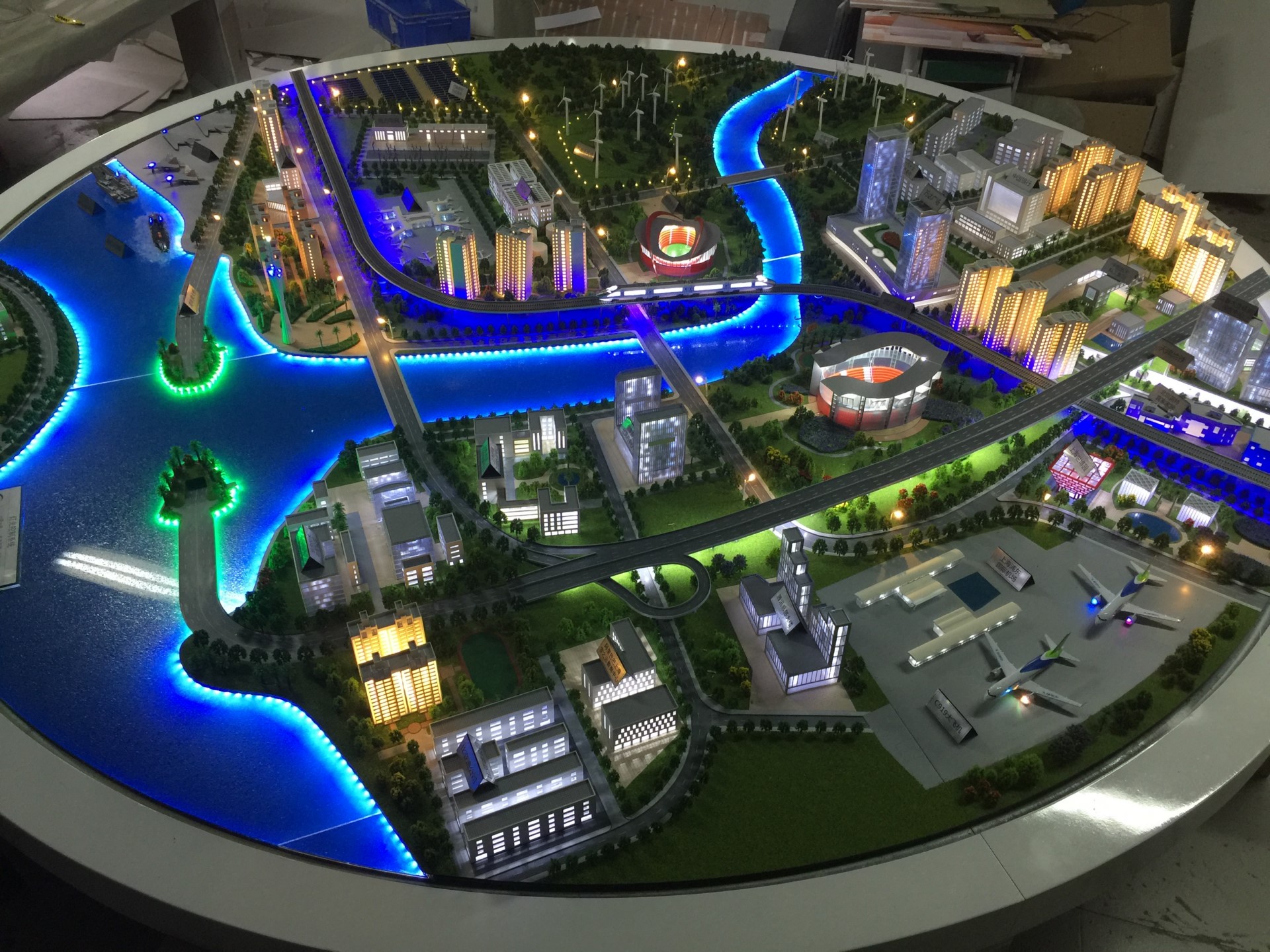
The Role of Greening in Urban Models
Greenery does more than decorate.
It communicates the quality of life in the planned development.
ASimulation Greening For Urban Sand Modelserves several functions:
Scale reference– A tree next to a building shows relative height.
Visual rhythm– Rows of street trees guide the eye along boulevards.
Zone definition– Dense tree canopies separate residential areas from commercial corridors.
Atmosphere– Parks, plazas, and green roofs make the model inviting.
InUrban Model Scene Layout Design, greenery is not an afterthought – it is planned from the beginning.
Core Elements of Simulation Greening
1. Hand‑Crafted Trees
The most realistic trees are made by hand, not bought pre‑assembled.
Wire Trunk and Branch Structure– Twist fine copper or steel wire into a natural trunk shape.
Multiple strands create thick bases with tapering branches.
For aHigh Toughness Material Sand Table Model, use wire that holds its shape without snapping.
Bark Texture– Apply latex, sculpting compound, or acrylic paint mixed with fine sand.
Dry‑brush with lighter shades to highlight bark grooves.
Foliage Application– Foliage materials include:
Flocking– Fine fibres applied with static electricity for dense canopies.
Foam clusters– Pre‑coloured foam pieces glued to branch tips.
Natural fibres– Preserved moss, coconut fibre, or hemp for rustic textures.
Paper leaf punches– For deciduous trees at larger scales (1:50 or 1:100).
Species Variation– Different trees look different.
Deciduous trees (oak, maple)– Irregular canopies, lighter green foliage, visible branch structure.
Conifers (pine, spruce)– Conical shapes, darker green foliage, dense coverage.
Flowering trees (cherry, magnolia)– Add pink or white foam clusters.
For large‑scale production orArchitectural Model Prototype Development, pre‑made tree armatures can be purchased and custom‑flocked to match species.
2. Electrostatic Grass (Flocking)
Flat painted grass looks like a pool table.
Real grass has texture, depth, and variations in shade.
Electrostatic flockinguses static electricity to stand grass fibres upright.
The process:
Apply a layer of slow‑drying PVA glue or acrylic medium to the lawn area.
Use a handheld static grass applicator (flocking machine).
Sprinkle fibres through the applicator; static charges make them stand vertically.
Vacuum loose fibres after the glue dries.
Fibre Lengths– 2mm for manicured lawns, 4mm for parks, 6‑8mm for meadows or rough grass.
Colours– Apply multiple shades in layers: base green, then lighter green highlights, then brown or yellow patches for natural variation.
InSand Table Model Exhibition Layout Design, large grass areas should be flocked first before adding trees and buildings – this creates a seamless base layer.
3. Bushes, Shrubs, and Ground Cover
Not all vegetation is trees.
Shrubs– Form clumps of foam or flocking glued directly to the base.
Hedgerows– Strips of foliage lining property boundaries.
Flower beds– Small clusters of bright‑coloured flocking or static grass.
Weedy areas– Longer (6‑8mm) fibres in brown and yellow‑green mixed into rough patches.
For aSimulation Water Landscape Sand Table Model, aquatic plants (cattails, reeds) can be simulated with fine wire tipped with brown flocking.
4. Green Roofs and Vertical Greening
Modern urban models often include sustainable features.
Green roofs– Apply a thin layer of short static grass (2mm) to building tops.
Living walls– Strips of green flocking on building facades.
Rooftop gardens– Add miniature planters, trees, and seating on podium levels.
These features align withEco Friendly Material Architectural Modelpractices when using biodegradable flocking and recycled foam.
Tree Placement and Scene Composition
A random scatter of trees looks unnatural.
Greening should follow real‑world patterns.
Street Trees
Plant trees at regular intervals along boulevards.
For scale realism, at 1:200, a tree every 1‑2cm represents 2‑4 meters between trunks.
Offset trees on opposite sides of the street (not directly opposite).
Park Trees
Cluster trees in informal groups.
Vary species: dense conifers in one area, spreading deciduous oaks in another.
Leave open lawns in between.
Forest Edges
Where a wooded area meets an open field, plant smaller trees or shrubs at the transition zone.
Gradually reduce tree density toward the open area.
Singular Specimen Trees
A large, distinctive tree at a plaza entrance or building forecourt creates a focal point.
Make it taller and wider than surrounding trees.
Materials for Simulation Greening
| Material | Use | Notes |
|---|---|---|
| Copper or steel wire | Tree trunks and branches | Flexible, holds shape |
| Latex or acrylic gel | Bark texture | Mix with sand for grain |
| Static grass fibres | Lawns, meadows | 2‑8mm lengths, multiple colours |
| Foam foliage clusters | Tree canopies, shrubs | Lightweight, pre‑coloured |
| Preserved moss | Ground cover, shrub bases | Natural texture |
| Fine sand and gravel | Forest floors, paths | Mix with glue for realistic ground |
| PVA glue | Adhesive for flocking | Slow‑drying for static grass |
Durable Greening for High‑Traffic Models
Models displayed in public areas need tougher vegetation.
For aHigh Toughness Material Sand Table Model, choose:
Wire armatures– Bend but do not break.
Foam foliage– Lightweight and impact‑resistant.
Flocked surfaces– Sealed with matte clear coat to prevent shedding.
Removable trees– Magnet‑mounted for easy replacement if damaged.
InSand Table Model Exhibition Layout Design, high‑traffic areas (edges where visitors lean) should have simpler, more durable greenery.
Delicate hand‑crafted trees are safer in the centre.
Protecting Greening During Prototyping and Transport
DuringArchitectural Model Prototype Development, you may test multiple greening layouts before finalising.
Use temporary adhesive (spray mount) for trees and flocking so they can be repositioned.
When moving a finished model, greening is vulnerable.
Sand Table Model LED Light Replacementwork often requires lifting buildings; trees should be temporarily removed to avoid damage.
After installation, protect the model with aCustom Protective Case For Sand Table Modelto prevent dust accumulation and accidental snagging of delicate foliage.
Maintaining Greening – Fading and Shedding
Over time, grass flocking sheds and tree colours fade from UV exposure.
Sand Table Model Anti Aging Maintenancefor greening includes:
Re‑flocking bare patches– Apply fresh static grass to worn areas.
UV‑blocking clear coat– Spray over grass and tree foliage to slow fading.
Annual inspection– Check for loose trees, re‑glue as needed.
Colour touch‑up– Airbrush faded foliage with matching green tones.
For museum‑quality models, schedule professional greening restoration every 3‑5 years.
Common Mistakes in Simulation Greening
Uniform grass colour– Real lawns have variation. Use 2‑3 shades of static grass.
Oversized trees– At 1:200 scale, a 20m tree should be 10cm tall. Measure carefully.
Incorrect species– Pine trees do not belong in a tropical resort model. Match species to climate.
Cluttered parks– Too many trees block sightlines. Leave open lawns.
Glossy foliage– Tree canopies should be matte. Use matte clear coat, not gloss.
Case Study: Greening a 1:200 Scale Downtown Model
An urban planning firm needed a model of a new downtown district with extensive parkland.
Simulation Greening For Urban Sand Modeltechniques included:
Lawns– Electrostatic grass (4mm) in two shades of green.
Street trees– 250 hand‑crafted deciduous trees (wire trunks, foam foliage).
Park trees– 80 conifer trees (conical shape, dark green flocking).
Green roofs– 2mm static grass on six building tops.
Waterfront– Aquatic plants around aSimulation Water Landscape Sand Table Modelriver.
The model was built on aHigh Toughness Material Sand Table Modelbase (ABS and PETG).
ACustom Protective Case For Sand Table Modelwith UV‑blocking acrylic kept the greening pristine.
AnnualSand Table Model Anti Aging Maintenancepreserved the colours for over five years.
Future Trends in Simulation Greening
Preserved real moss– Ultra‑realistic ground cover (short‑term exhibitions only).
3D printed tree armatures– Consistent shapes for large‑scale production.
Biodegradable flocking– Eco‑friendly grass fibres.
Colour‑variable fibres– Green that shifts hue for autumn or drought scenes.
Conclusion
Simulation Greening For Urban Sand Modeltransforms a technical layout into a living, breathing miniature world.
Hand‑crafted trees, electrostatic grass, and thoughtful placement create the illusion of nature at scale.
UseArchitectural Model Prototype Developmentto test greening layouts before full production.
Plan yourUrban Model Scene Layout Designwith tree lines, park clusters, and open lawns.
InSand Table Model Exhibition Layout Design, protect delicate greenery with aCustom Protective Case For Sand Table Model.
For durable models, chooseHigh Toughness Material Sand Table Modelcomponents for trees and bases.
When LEDs fail inside a tree‑lined park,Sand Table Model LED Light Replacementensures the glow returns.
Whether you are designing a downtown core, a suburban master plan, or a coastal resort, simulation greening is the detail that brings your model to life.
Contact a specialist today.
Plant your miniature forest.
Ready to add realistic greening to your urban sand model? Request a consultation with your site plan and vegetation requirements. Get a response within 48 hours.


