Urban Planning Model Maintenance And Restoration
Introduction
A sand table model is a significant investment.
It represents years of planning and thousands of dollars.
But without proper care, it deteriorates.
Dust settles, paint fades, LEDs burn out, trees fall off.
That is whyUrban Planning Model Maintenance And Restorationis essential.
This guide explains how to care for your model.
What to do when damage occurs.
And how to restore an older model to its original glory.
Let us begin.
Why Maintenance Matters
A well‑maintained urban planning model can last 10–20 years.
A neglected model may look worn after just two years.
Urban Planning Model Maintenance And Restorationprotects your investment.
Regular cleaning prevents dust buildup that dulls details.
Periodic inspections catch loose parts before they fall.
Timely repairs stop small issues from becoming major problems.
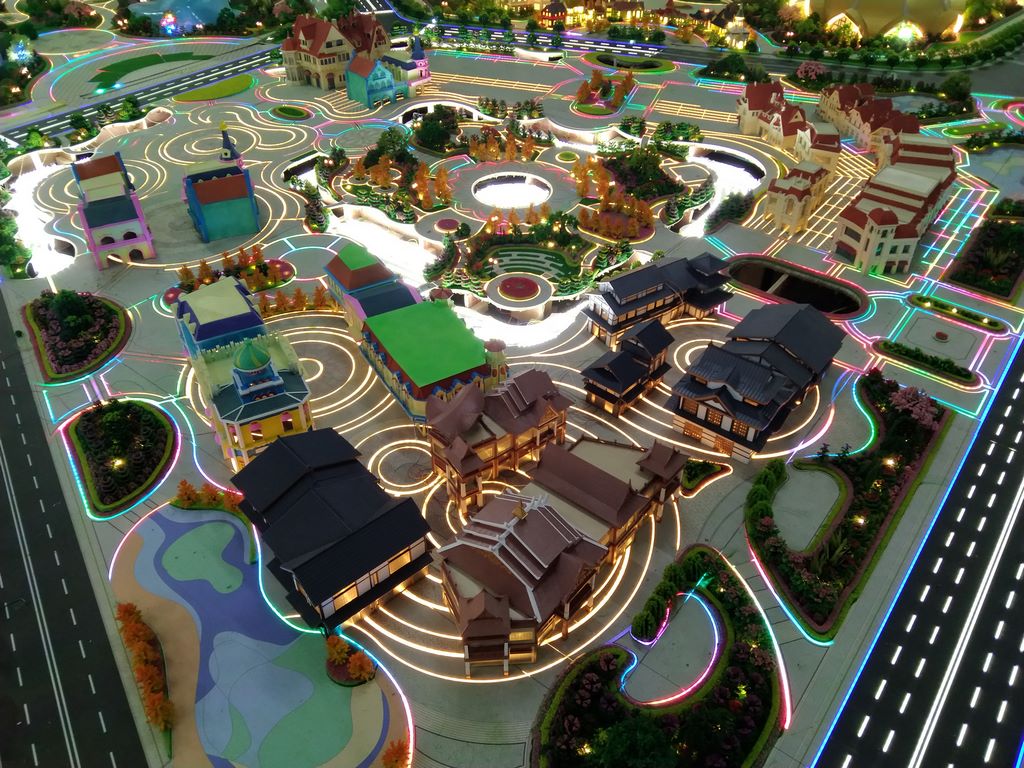
Daily and Weekly Maintenance
Dusting
Dust is the number one enemy.
Use compressed air to blow dust off the model.
Never wipe with a cloth – it can snag delicate trees or flocking.
Keep the acrylic cover on whenever the model is not being viewed.
Inspection
Walk around the model weekly.
Look for:
Loose buildings or trees.
Faded paint areas.
Burnt‑out LEDs.
Cracks in resin water features.
For models built withHigh Simulation Miniature Model Makingtechniques, pay special attention to hand‑painted details – they are more fragile than printed surfaces.
Environmental Control
Keep the model away from direct sunlight – UV fades colors.
Maintain stable humidity (40–60%) to prevent wood frames or MDF bases from warping.
Avoid temperature extremes.
Common Problems and How to Fix Them
Loose or Fallen Trees
Trees are the most vulnerable parts.
Use tweezers and UV‑curing glue to reattach them.
Do not use super glue – fumes cloud acrylic and resin.
Faded Paint
Over time, even UV‑stable paints fade.
A professionalSand Table Model Landscape Decoration Craftspecialist can color‑match and repaint faded areas.
For large areas, consider a full repaint every 5–7 years.
Cracked Resin Water
Epoxy resin can crack due to temperature changes.
Small cracks can be filled with fresh resin.
Large cracks require removing the old resin and re‑casting the water feature.
Burnt‑Out LEDs
LEDs have a lifespan of 30,000–50,000 hours.
When they fail, a technician skilled inLED Lighting Sand Table Model Installationcan replace them.
Do not attempt DIY soldering near the model – heat can damage nearby materials.
Warped Base
If the MDF base warps, the entire model becomes unlevel.
A restoration service can transfer the model to a new base – either aWooden Frame Architectural Sand Table Modelor aMetal Structure Urban Planning Sand Modelfor extra rigidity.
When to Call a Professional Restoration Service
Some repairs require expert skills.
Broken 3D Printed Buildings
If your model includes3D Printing Architectural Sand Table Modelcomponents, a broken building can be reprinted from the original CAD file.
A restoration service will match the paint and weathering.
Extensive Landscape Damage
After years of use, flocking may wear off, and dozens of trees may be missing.
A professionalSand Table Model Landscape Decoration Craftexpert can re‑apply grass, add new trees, and refresh ground textures.
Complete Model Refurbishment
For a model that has been neglected for many years, anArchitectural Sand Table Model Repair Servicecan perform a full restoration:
Disassemble damaged sections.
Repair or replace broken buildings.
Re‑paint faded areas.
Re‑cast water features.
Replace burnt‑out LEDs and rewire.
Seal and protect.
Case Study: Restoring a 15‑Year‑Old Master Plan Model
A city planning department had a large urban planning model that had been on display for 15 years.
The colors had faded, dozens of trees were missing, and half the LED streetlights no longer worked.
They hired anUrban Planning Model Maintenance And Restorationspecialist.
The restoration included:
3D printing 25 missing buildings from archived CAD files.
Color‑matching and repainting the entire model.
Replacing 120 trees using hand‑made replicas.
Installing a new LED system with programmable zones.
The restored model looked better than when it was new.
Cost was 35% of a replacement model.
DIY Maintenance vs. Professional Restoration
| Task | DIY | Professional |
|---|---|---|
| Dusting | Yes | No |
| Reattaching loose trees | Yes (with care) | For complex areas |
| Repainting small areas | No (color matching is difficult) | Yes |
| Replacing LEDs | No (risk of damage) | Yes |
| Re‑casting resin water | No | Yes |
| Full restoration | No | Yes |
Cost Factors for Maintenance and Restoration
Model size– Larger models cost more to restore.
Extent of damage– Minor touch‑up vs. full rebuild.
Availability of original files– Having CAD/3D files reduces reprinting cost.
LED complexity– Simple on/off vs. programmable animations.
Transport– Shipping large models to a restoration shop.
Typical range: 15,000 for a full restoration of a large, complex model.
How Often Should You Service Your Model?
Light use (sales center, occasional viewing)– Professional inspection every 2 years.
Moderate use (museum, daily viewing)– Annual inspection.
Heavy use (interactive exhibit, frequent touching)– Every 6 months.
Outdoor model– Quarterly inspection (outdoor models degrade faster).
Preventing Future Damage
Always keep the acrylic cover on when not in use.
Place the model away from windows and direct sunlight.
Use a dehumidifier in humid climates.
Have a professional re‑seal wooden frames every 3–5 years.
Keep the maintenance schedule documented.
Future Trends in Model Restoration
3D scanning for part replication– Scan existing buildings to create printable files for replacements.
Modular restoration kits– Pre‑made LED modules and tree packs for common model sizes.
Remote inspection– Use high‑resolution cameras for annual remote assessments.
Conclusion
Urban Planning Model Maintenance And Restorationkeeps your sand table model looking its best for years or even decades.
Perform regular dusting and inspections.
Address small issues before they become large.
When damage exceeds your skills, call a professional.
Whether your model featuresHigh Simulation Miniature Model Making, requires anArchitectural Sand Table Model Repair Service, includes3D Printing Architectural Sand Table Modelcomponents, relies onLED Lighting Sand Table Model Installation, or showcases intricateSand Table Model Landscape Decoration Craft, a proper maintenance and restoration plan will protect your investment.
Contact a specialist today.
Schedule an inspection.
Preserve your urban planning model for the future.
Ready to maintain or restore your urban planning model? Request a consultation with photos of your model. Get a response within 48 hours.


