Tourism Resort Architectural Scale Model Making
Introduction
Tourism Resort Architectural Scale Model Making is a specialized craft. It brings resort visions to life. This process creates accurate miniatures of hotels, villas, pools, and landscapes. Developers use these models to test designs. Investors understand projects faster. Marketing teams close deals easily.
A high-quality Tourism Resort Architectural Scale Model shows every detail. It includes terrain, vegetation, and lighting. Without such a model, planning a large resort becomes risky. With it, mistakes are caught early. Costs are saved. Stakeholders get excited.
This guide covers everything about Tourism Resort Architectural Scale Model making. You will learn techniques, materials, and steps. We also explore related model types. These include Large Complex Architectural Scale Model, Real Estate Marketing Architectural Sand Model, City Building Architectural Sand Table Mode, Apartment Architectural Scale Model, and Architectural Sand Table Model for Design Institute.
Let’s dive deep.
Why a Tourism Resort Architectural Scale Model Matters
A Tourism Resort Architectural Scale Model is not a toy. It is a strategic tool. Resorts cover huge areas. They have many buildings. Pools, restaurants, spas, and golf courses must fit together. A flat drawing cannot show spatial relationships.
A physical model does. You can walk around it. You see sightlines. You check sun exposure. You test guest flow.
For example, a Tourism Resort Architectural Scale Model reveals if a pool blocks a restaurant view. It shows if a pathway is too narrow. It highlights unbalanced building heights.
Moreover, this model helps marketing. Buyers of resort villas want to see the whole environment. A Tourism Resort Architectural Scale Model gives them confidence. They imagine themselves there. Sales increase.
Every serious resort developer needs a Tourism Resort Architectural Scale Model. It reduces risk. It improves design. It boosts presales.
Key Techniques for Creating a Tourism Resort Architectural Scale Model
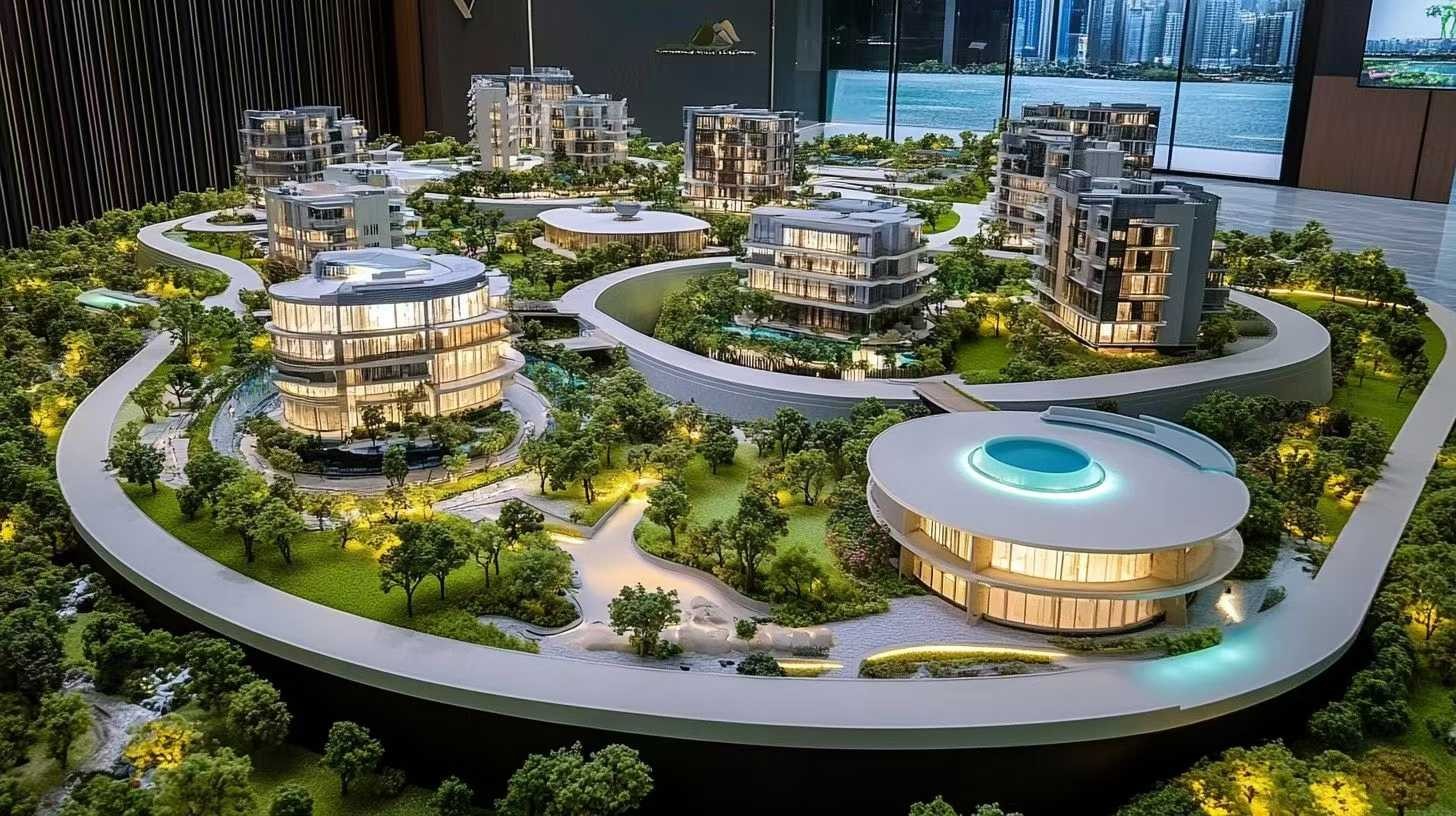
Making a Tourism Resort Architectural Scale Model requires skill. Here are the core techniques.
Laser Cutting
Laser cutting ensures precision. Walls, roofs, and windows are cut from acrylic or wood. A Tourism Resort Architectural Scale Model demands exact scaling. Laser cutters achieve 0.1mm accuracy.
3D Printing
Complex shapes like curved pools or modern pavilions are 3D printed. This technique saves time. It also allows organic forms. Many parts of a Tourism Resort Architectural Scale Model now come from 3D printers.
Hand Finishing
After assembly, artists paint and texture surfaces. They add tiny trees, cars, and people. Hand finishing makes a Tourism Resort Architectural Scale Model feel alive.
LED Lighting
Lighting shows nighttime ambiance. Small LEDs are embedded in streetlights and building interiors. A Tourism Resort Architectural Scale Model with lighting sells the dream.
CNC Milling
For large base terrain, CNC milling carves foam or wood. This creates hills, lakes, and roads. Every Tourism Resort Architectural Scale Model starts with a milled base.
These techniques combine to produce stunning results.
Materials Used in Tourism Resort Architectural Scale Model Production
The choice of materials affects quality. A durable Tourism Resort Architectural Scale Model uses the best.
Acrylic: Clear for windows, colored for walls. Strong and laser-friendly.
ABS Plastic: Great for 3D printed parts. Lightweight and paintable.
Plywood: For structural bases. Cheap and stable.
Foam Board: Used for terrain and quick mockups.
Resin: For water effects like pools and fountains. Creates realistic reflections.
Paper Cardboard: For early concept models. Not for final presentation.
Each material serves a purpose. A professional Tourism Resort Architectural Scale Model often mixes three or more.
For Large Complex Architectural Scale Model projects, metal and dense acrylic are added. That ensures stability over large spans. But for resorts, lightweight materials work fine because models are often moved to different events.
Steps to Build a Tourism Resort Architectural Scale Model
Follow these 10 steps to create a Tourism Resort Architectural Scale Model from scratch.
Step 1: Gather Drawings
Collect CAD files, site plans, and elevation drawings. The scale is decided (e.g., 1:200 or 1:500). A Tourism Resort Architectural Scale Model at 1:200 shows more detail.
Step 2: Prepare the Base
Cut a plywood or foam base. Mark the resort layout on it.
Step 3: Build Terrain
Layer foam sheets to create hills and valleys. Sand smooth.
Step 4: Print and Cut Buildings
Use laser cutting for repetitive elements like hotel rooms. Use 3D printing for unique villas.
Step 5: Assemble Structures
Glue walls together. Add roofs. Attach balconies. Every Tourism Resort Architectural Scale Model needs precise assembly.
Step 6: Paint and Texture
Spray paint base colors. Hand paint details like window frames. Add texture paste for roads.
Step 7: Add Landscape
Glue model trees, grass sheets, and hedges. Place tiny figures by the pool.
Step 8: Install Lighting
Drill holes for LEDs. Wire them to a battery pack. Test the glow.
Step 9: Label and Frame
Add a legend. Place a clear acrylic cover if needed.
Step 10: Final Quality Check
Inspect all parts. Fix loose pieces. Your Tourism Resort Architectural Scale Model is ready.
These steps apply to most resort scales. For a Real Estate Marketing Architectural Sand Model, steps 7 and 8 are emphasized. Marketing sand models need attractive lighting and colorful landscaping to wow buyers.
Applications Beyond Resorts: Other Scale Model Types
While we focus on Tourism Resort Architectural Scale Model, other models share similar methods. Here are five important types.
1. Large Complex Architectural Scale Model
This type covers airports, hospitals, or university campuses. A Large Complex Architectural Scale Model integrates many buildings and infrastructure. The same laser cutting and 3D printing techniques apply. However, scale is often smaller (1:500 or 1:1000) to fit everything. Structural engineering must be robust to avoid sagging.
2. Real Estate Marketing Architectural Sand Model
Sales offices love this model. A Real Estate Marketing Architectural Sand Model highlights residential units, green spaces, and nearby amenities. Lighting is crucial. Buyers press buttons to see different zones. Unlike a Tourism Resort Architectural Scale Model, marketing sand models rarely show interiors. They focus on location value.
3. City Building Architectural Sand Table Mode
Urban planners use this. A City Building Architectural Sand Table Mode displays entire districts. It includes roads, bridges, public transport, and zoning colors. Resorts might be a small part of a city sand table. The mode allows interactive simulations. For example, move a building to see traffic changes.
4. Apartment Architectural Scale Model
Single-building models are common. An Apartment Architectural Scale Model shows floor plans, balconies, and roof gardens. It is often transparent to reveal interior layouts. Resorts sometimes include apartment towers. So Apartment Architectural Scale Model details help market condo units within the resort.
5. Architectural Sand Table Model for Design Institute
Architecture schools and research firms use these. An Architectural Sand Table Model for Design Institute is experimental. Students test unconventional forms. Materials are cheap – cardboard, foam, glue. The goal is learning, not sales. But the basic process mirrors a Tourism Resort Architectural Scale Model: build base, add volumes, refine.
Each type serves a different user. Yet all rely on scale, accuracy, and visual communication.
Benefits of High-Quality Tourism Resort Architectural Scale Model
Investing in a Tourism Resort Architectural Scale Model brings many advantages.
Better design decisions: See conflicts before construction.
Faster permits: Show authorities exactly what you plan.
Stronger investor pitches: A physical model is more convincing than slides.
Higher presales: Buyers pay deposits after seeing the model.
Team alignment: Architects, engineers, and marketers agree on the same vision.
Public relations: Display the model at trade shows or hotel lobbies.
A poorly made model does the opposite. It confuses and disappoints. So always hire expert makers.
For a Architectural Sand Table Model for Design Institute, the benefit is educational. Students learn scale and spatial reasoning. For resorts, the benefit is financial. One good model can sell millions in vacation homes.
How to Choose a Professional Model Maker
Not all model makers handle Tourism Resort Architectural Scale Model projects. Look for these qualities.
Experience with Resorts
Ask for portfolio examples of resorts, golf courses, or beach hotels. A tourism resort has unique elements: pools, cabanas, piers. The maker must know how to replicate water and tropical plants.
Scale Precision
Check their tolerance. A good Tourism Resort Architectural Scale Model has errors under 1mm at 1:200 scale.
Material Quality
They should use acrylic, resin, and high-density foam. Avoid makers who only use paper or cheap plastic.
Lighting Capability
LED wiring is tricky. Ask to see nighttime photos of previous models.
Delivery and Packaging
Models are fragile. The maker must crate them safely. Some offer on-site setup.
Request a quote from at least three firms. Compare price, timeline, and warranty.
Common Mistakes to Avoid in Tourism Resort Architectural Scale Model Making
Even experienced teams make errors. Avoid these.
Wrong scale: Double-check scale ratio before cutting anything.
Ignoring context: Show surrounding roads and nature, not just the resort.
Overcrowding: Too many trees block views of buildings.
Weak glue: Parts fall off during transport. Use epoxy or super glue.
No lighting plan: Add lights only after assembling walls? No – plan wiring first.
Flat water: Resorts need shiny resin for pools. Matte paint looks dead.
A correct Tourism Resort Architectural Scale Model avoids all these.
Cost and Time Estimates
Prices vary widely. A basic Tourism Resort Architectural Scale Model (1:500, 2ft x 3ft) starts at 20,000.
Time ranges from 4 to 12 weeks. Complex terrain and hundreds of trees extend the schedule.
Always get a contract. Specify materials, scale, deadline, and number of revisions.
Future Trends in Scale Model Making
Digital tools are changing the craft. But physical models remain irreplaceable. Here are trends.
Mixed reality: AR overlays digital data on physical models. A Tourism Resort Architectural Scale Model can be scanned and augmented with real-time wind or sun simulation.
Sustainable materials: Biodegradable filaments for 3D printing. Recycled foam for terrain.
Modular models: Interchangeable parts for different resort phases. Add a new wing without rebuilding everything.
Smart sensors: Tiny humidity or temperature sensors embedded. Useful for engineering tests.
For Large Complex Architectural Scale Model projects, modular and smart features are already in use. Resorts can adopt similar innovations.
Conclusion
Tourism Resort Architectural Scale Model making is a powerful discipline. It merges art, engineering, and marketing. A well-executed model prevents design disasters, accelerates sales, and inspires everyone involved.
Whether you are building a beach resort, a mountain lodge, or a golf retreat, start with a scale model. Apply the techniques and steps shared here. Avoid common mistakes. Choose a skilled maker.
And remember, the world of scale modeling extends far beyond resorts. From Large Complex Architectural Scale Model to Real Estate Marketing Architectural Sand Model, from City Building Architectural Sand Table Mode to Apartment Architectural Scale Model and Architectural Sand Table Model for Design Institute, each type has its place. But for tourism developments, nothing beats a dedicated Tourism Resort Architectural Scale Model.


