How professional model manufacturers can turn your ideas into miniature masterpieces
From blueprint to stunning implementation: How professional model manufacturers can turn your ideas into miniature masterpieces
A high-quality sand table model is often the ultimate footnote to the saying 'one picture wins a thousand words' in key scenarios such as planning display, proposal reporting, and marketing experience. As a professional sand table model manufacturer that has been deeply involved in the industry for many years,
we deeply understand that what customers deliver to us is not only a set of drawings, but also a heavy trust and expectation. Today, we will unveil the entire process of a professional level sandbox model from concept to perfect birth from the perspective of the manufacturer, and how we ensure that every project becomes a precise, efficient, and infectious communication tool.
Phase 1: Demand Resonance and Value Definition
The project started much earlier than hands-on production. When clients approach us with preliminary ideas, our core task is not to rush to quote, but to engage in deep communication and value mining. We will explore several core dimensions:
Display Core: What is the core mission of the model? Is it technical persuasion for bidding reports, planning publicity for the public, or a scenario experience to assist sales? Goals determine strategies.
Value dimension: What are the key value points that need to be highlighted? Is it the grandeur of macro planning, the delicate texture of architectural aesthetics, the livable ecology of landscape environment, or the scientific and efficient industrial flow?
Experience scenario: In what space and under what lighting environment will the model be presented? Is it necessary to link with digital content (such as LED screens, iPad central control)?
Through this stage of resonance, we work together with the client to lock in the "soul" of the model, and based on this, determine the optimal proportion, performance focus, dynamic and multimedia integration plan, forming a detailed "Production Plan" to ensure that all subsequent work accurately serves the core objectives.
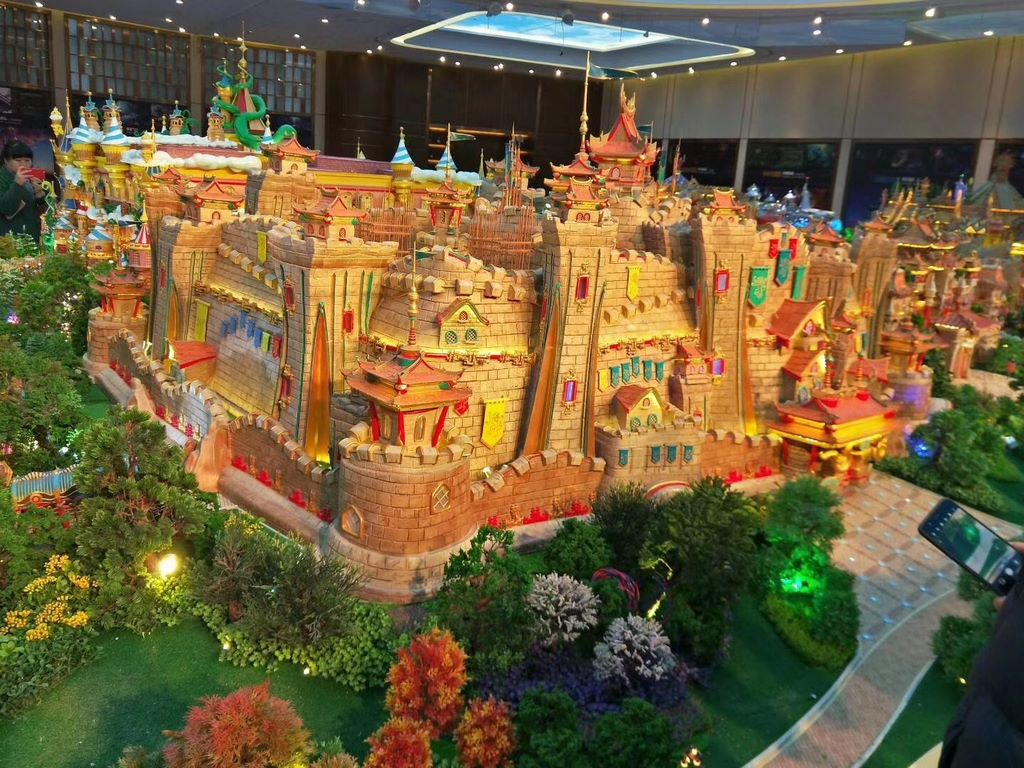
Phase 2: Design Deepening and Craft Deconstruction
After clarifying the direction, our design and engineering teams transformed the drawings into an executable 'model engineering language'.
Drawing conversion and digital modeling: We use professional software to perform 3D reconstruction and deepening of customer drawings. This process can identify potential design expression difficulties in advance and provide professional model perspective optimization suggestions to ensure that the 3D representation is both faithful to the original design and visually compelling.
Material and process strategy formulation: We will develop the most suitable process path for different components. For example:
Core building: High precision CNC carved ABS panels combined with 3D printed refined components may be used to ensure sharp lines and complex facade details.
Complex irregular structure: Directly introducing industrial grade SLA photopolymerization 3D printing, achieving modeling freedom and surface quality that traditional processes cannot achieve.
Large scale standardized components: laser cutting is used to ensure absolute consistency of hundreds of windows and railings.
Special effects: For example, the water feature adopts multi-layer carving overlay and dynamic light and shadow system, and the terrain adopts digital carving and real material coating.
Phase Three: Integration of Precision Manufacturing and Artistic Design
This is the core stage of transforming digital solutions into physical entities, and our workshop is like a highly collaborative micro engineering headquarters.
Modular parallel production: Modules such as architecture, landscape, chassis, and electronic systems are started synchronously by different professional teams. This not only greatly improves efficiency, but also allows each craftsman to focus on their areas of expertise.
Artist's ingenuity: At this stage, models are not only industrial products, but also handmade crafts. Our painters imbue materials with soul through multi-layer spray painting, aging treatment, and hand drawn embellishment; Landscape architects carefully combine dozens of different materials and colors of miniature vegetation to create a layered and seasonal ecological scene.
Intelligent system integration: The lighting circuit, dynamic machinery, and multimedia control module are precisely embedded and integrated. We adopt a weak current control system to ensure safety and stability, and can achieve smooth switching and intelligent interaction of scene modes through a central controller or mobile terminal.


