Agricultural Sand Table Model Production Process
Agricultural Sand Table Model Making Guide
I. Manufacturing Process
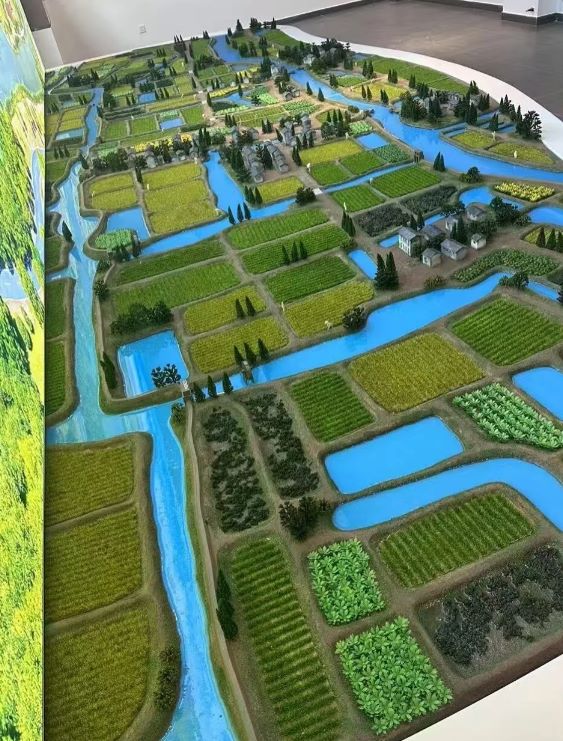
Agricultural sand tables must accurately reproduce farmland, greenhouses, water systems, and crop distribution, using a modular construction and assembly method. First, based on actual farm site plans, divide the area into modules such as planting zones, roads, and irrigation channels, and carve the basic terrain piece by piece. Greenhouses are moulded separately to ensure they can be disassembled for display of internal structures. Crop zones are pressed using miniature moulds to retain the natural density of growth. Dynamic components such as irrigation systems and greenhouse ventilation openings must include movable mechanisms to ensure smooth demonstrations.
2. Material Selection
The main structure is printed using high-tensile resin to ensure lightweight durability while reproducing the intricate textures of field ridges and irrigation channels; greenhouse frames are made of ABS material for flexible opening and closing without deformation; crop seedlings are moulded using soft rubber moulds for soft, lifelike leaves; soil is filled with an eco-friendly resin mixed with stone powder, with grass powder sprinkled on the surface or miniature plant models attached to enhance realism. Roads and waterways are simulated using grey resin and transparent soft rubber, balancing durability and visual appeal.
III. Post-processing and Colouring
After assembly, the model requires manual sanding of seams, particularly focusing on the smoothness of field ridge edges and greenhouse frame supports. Soil areas are sprayed with matte earth-yellow paint, with dark spots added locally to simulate soil texture; crop leaves are hand-painted with green pigment using a fine brush to avoid a mechanical appearance; greenhouse plastic film sections are sprayed with semi-transparent light blue paint, with aged treatment applied to the edges; water systems have a small amount of blue pearlescent paint dripped onto the surface to create a rippling effect. Finally, apply a protective clear varnish to ensure waterproofing, fade resistance, and long-term stability without deformation.
Sand tables created following this process clearly depict farm layouts while authentically recreating agricultural ecosystems through detailed elements, combining high fidelity with practicality.


