Case study of chemical plant model production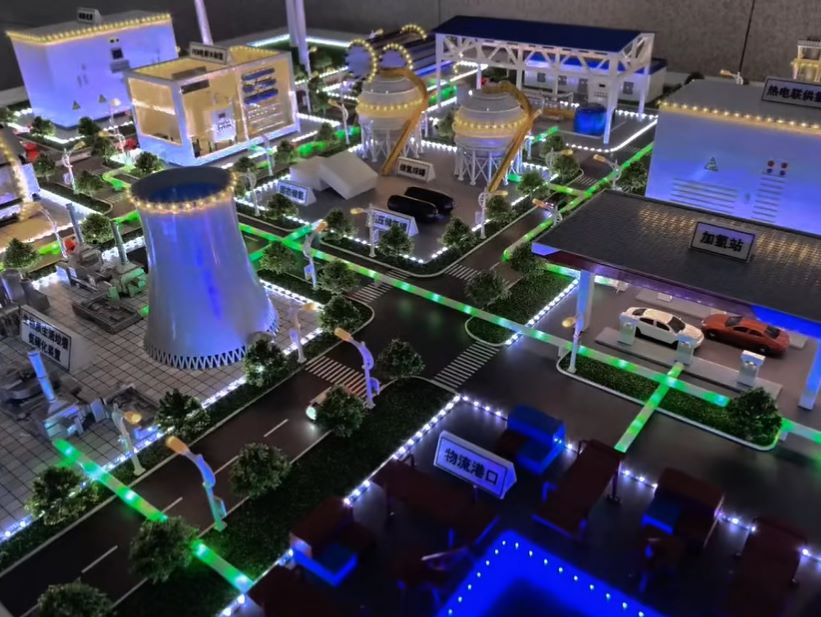
1、 Production process and flow design
Skeleton construction stage
Using ABS plastic board as the main frame, the core structures such as reaction towers and pipeline supports are precisely constructed through laser cutting. The curved pipeline is softened and shaped using a hot air gun to ensure compliance with industrial streamline characteristics. The factory layout is scaled at a ratio of 1:200, and the equipment spacing is adjusted based on satellite images to ensure overall structural stability and compliance with real-world scenarios.
Detail stacking process
Tank stacking: 3D printed hemispherical and cylindrical nested combination, with joints filled and polished with soil to ensure a smooth and flawless surface.
Pipeline network: Medical silicone tubes are dyed and wrapped for fixation, with manually forged brass valves added at key nodes to enhance realism.
Ground system: Epoxy resin mixed with mineral powder pouring, dry sweeping technique simulates oil stains and rust marks, making the ground more industrial in texture.
2、 Innovative Application of Materials
Exterior wall of the building: Acrylic board etching or corrugated cardboard relief can be used instead, which can ensure strength and present the heaviness of industrial buildings.
Steel frame structure: treated with copper wire electroplating or grilled bamboo sticks spray painted to simulate the cold and rugged texture of a metal frame.
Glass curtain wall: Transparent PET film or UV cured cling film to ensure transparency while avoiding excessive reflection that affects visual effects.
Special effect materials:
Cooling tower water mist: Soak degreased cotton in glycerol solution to simulate the effect of steam rising.
Nighttime lighting: Fiber optic bundles combined with LED cold light sources are embedded to enhance the realism of nighttime scenes.
3、 Post processing and coloring techniques
Base treatment
After spraying gray primer on the entire model, it is partially polished with 000 steel wool to highlight the metallic wear texture. The welding seam adopts enamel paint dry sweeping technique to enhance the three-dimensional sense and make the details more realistic.
Color System
Equipment body: The main color tone is industrial gray (70%), paired with safety yellow (20%) and warning red (10%), which complies with the safety regulations of chemical plants.
Pipeline system: distinguished by fluid type, blue represents water, green represents chemicals, and red represents steam for easy identification.
Rusting effect: Oil painting pigments are applied in multiple layers, combined with the salting method to generate natural rust spots, enhancing the sense of age and industrial atmosphere.
Environmental integration
The chassis is made of gypsum to shape the terrain, and is sprinkled with fine sand and gravel to simulate the roads in the factory area. The surrounding vegetation uses miniature moss and model trees, which are fixed with atomized glue to make the overall scene more natural.
4、 Key points of restoration control
Equipment ratio: Strictly follow the comparison between CAD drawings and on-site photos to ensure accurate size of each component.
Pipeline routing: Adjust according to the PID flowchart to avoid logical errors.
Color system: Match the enterprise VI standard color card to ensure color reproduction.
Dynamic components: Key parts such as valves and instrument panels are designed as movable structures to enhance interactivity and realism.


