Case study on the production of port logistics sand table model
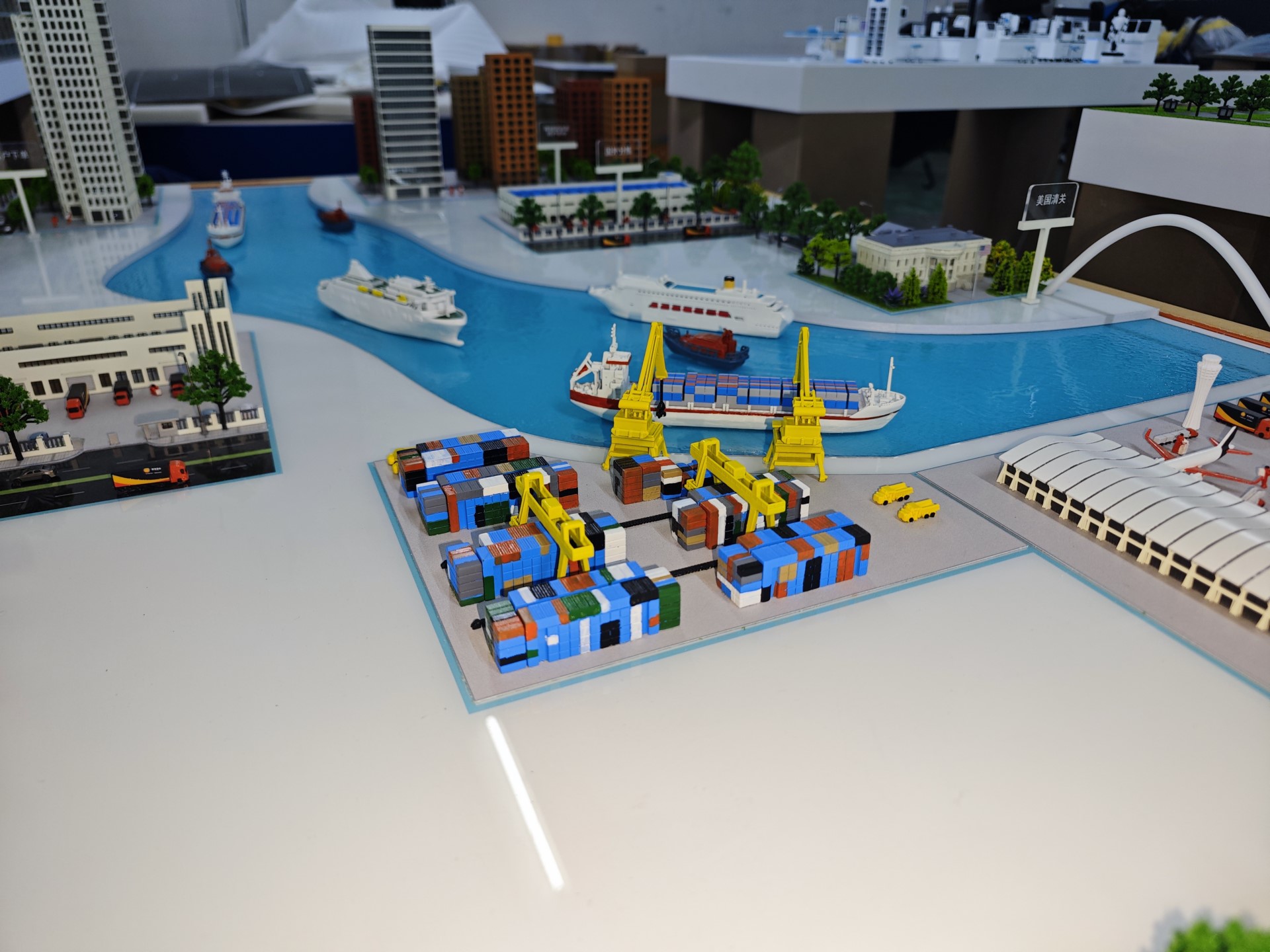
1、 Production process and workflow
Design Planning
Based on a real port, draw a floor plan to scale, marking functional areas such as docks, yards, and roads. Key emphasis will be placed on core equipment such as container cranes, gantry cranes, and ships to ensure proportional coordination. Reserve dynamic demonstration space during design (such as crane tracks, vehicle paths).
Material selection
Base: Wooden frame wrapped with silver gray aluminum-plastic panel, stainless steel edging, moisture-proof and crack resistant.
Architecture: ABS board cutting and assembling for office buildings and warehouses, acrylic board simulating glass curtain walls.
Vehicles and ships: 3D printed container trucks, cargo ships, and metal components (such as shore bridges) are laser cut and welded onto iron plates.
Landscape: Fine sand paved water area, small stones used for roads, light wood chips used for green belts.
Production and assembly
Mechanical components: The shore bridge and gantry crane adopt metal frames, and the track is driven by motors to move, simulating real operations.
Dynamic demonstration: The container transportation process is achieved through remote control (lifting → truck transportation → yard stacking).
Detail processing: Use a carving knife to depict the building joints, and fix micro street lights and signs with glue.
2、 Post processing and coloring techniques
Basic coating
Self spray paint thin coated metal parts (such as cranes), using cross spraying method to avoid color difference, and completing in multiple layers.
The building walls are hand-painted with magnetic paint to create brick patterns, and the paint is diluted with oil and water for aging treatment.
Scene enhancement
Water area: transparent resin mixed with blue pigment, with silver powder sprinkled on the surface to simulate wave light.
Road: The black permeable line method outlines the zebra crossing, and white acrylic embellishes the ruts.
Container: Spray painted in red/blue/yellow blocks, with black markers indicating the container number.
Protective layer
Spray matte varnish as a whole to prevent fading; Dynamic components (such as lifting arms) are individually waxed and lubricated.
3、 Key points of restoration control
Accurate proportion
Ships and vehicles are strictly scaled proportionally, and container stacking does not exceed layers (in accordance with the actual stacking height limit).
Functional simulation
The shore crane lifting equipment can be opened and closed, and the wheels of the container truck can be turned.
Install LED light strips on the conveyor belt in the bulk cargo area to simulate operational lighting.
Environmental details
Add miniature characters, signs, and green belts to avoid a sense of modeling.
Container yards are classified by color (e.g. blue is exclusive to shipping companies).


