Operating Room Model Production Case Study
Project Name: Tertiary Hospital Laminar Flow Operating Room Display Model
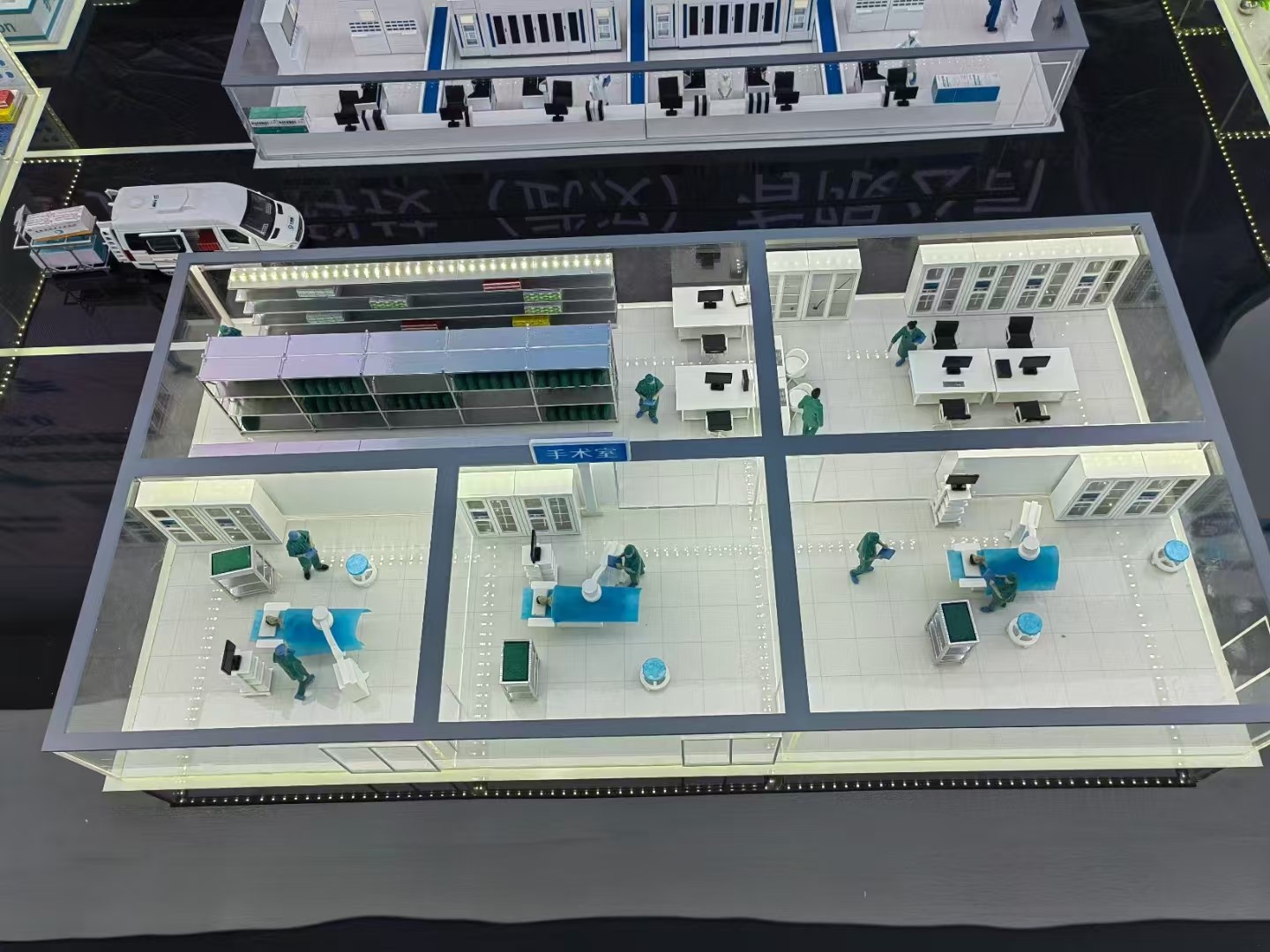
Phase 1: Skeletal Framework Construction
1. Main Structure Formation
Wall and Floor Modules→ 5mm matte ABS panels are CNC-cut into wall panels with 0.2mm pre-cut joints on the edges → The floor uses a three-layer lamination process: the base plate is engraved with track grooves → blue epoxy resin is poured to simulate a sterile area → covered with a scratch-resistant transparent film
Laminar Flow Ceiling SystemLaser-drilled 876 holes in stainless steel plates, with a hole diameter of 0.3mm and an error tolerance of ≤±0.02mm. Semi-transparent frosted acrylic is embedded in the interlayer, connected to a miniature fan unit at the back.
2. Medical equipment framework
3D-printed resin equipment bases (anaesthesia machines/monitors, etc.) are soaked in alcohol to remove layer lines
The吊塔 system uses 0.8mm brass tubes bent into shape, with fibre-optic cables running through the interior as wiring
Phase Two: Organ Shaping (12 days)
1. Core equipment precision machining
Surgical light: Transparent acrylic machined into an 8-layer lampshade, with an anti-glare coating applied using argon gas spraying
Operating table: → Aluminum alloy frame sandblasted → Silicone pads injected into the mould, with diamond-shaped anti-slip patterns pressed onto the surface
Instrument trolley: Mirror-finished legs with nano-coating to prevent fingerprints, tabletop etched with instrument positioning indentations
2. Environmental detail integration
Hand-painted blue-green anti-stain strip 1.2 cm above the floor, sprayed with gradient shading
Return air grille bonded with laser-cut stainless steel filter mesh, with hole size matching the actual product
Phase 3: Life infusion (9 days)
1. Medical-grade colour coating
Equipment colour separation:
Monitor main body with matte grey base coat
Knobs with perforated steel plates separately electroplated in blue
Emergency buttons with fluorescent red paint applied
Aged treatment: Instrument cart metal edges dry-brushed with silver powder to simulate wear and tear
2. Dynamic system testing
Laminar flow verification: Ignite specially formulated aromatic smoke and observe the smoke falling vertically after passing through the stainless steel perforated plate
Equipment interconnection: Magnetic modules are embedded in the吊塔 interface to enable quick plug-and-play operations
Final inspection standards (craftsmanship details visible to customers)
Tactile verification
All sharp edges are polished with a roller to achieve R0.5mm rounded corners
The silicone pad on the operating table has a compression rebound delay of ≤0.3 seconds
Visual Verification
Under ultraviolet light, the anaesthesia machine tubing displays fluorescent markings
Under a magnifying glass, the teeth of the needle holder are visible
Scene Reconstruction
The contaminated area floor is simulated with alcohol-diluted paint to mimic dried bloodstains
Medical waste bins are affixed with etched warning labels


