Crane Model Manufacturing Plan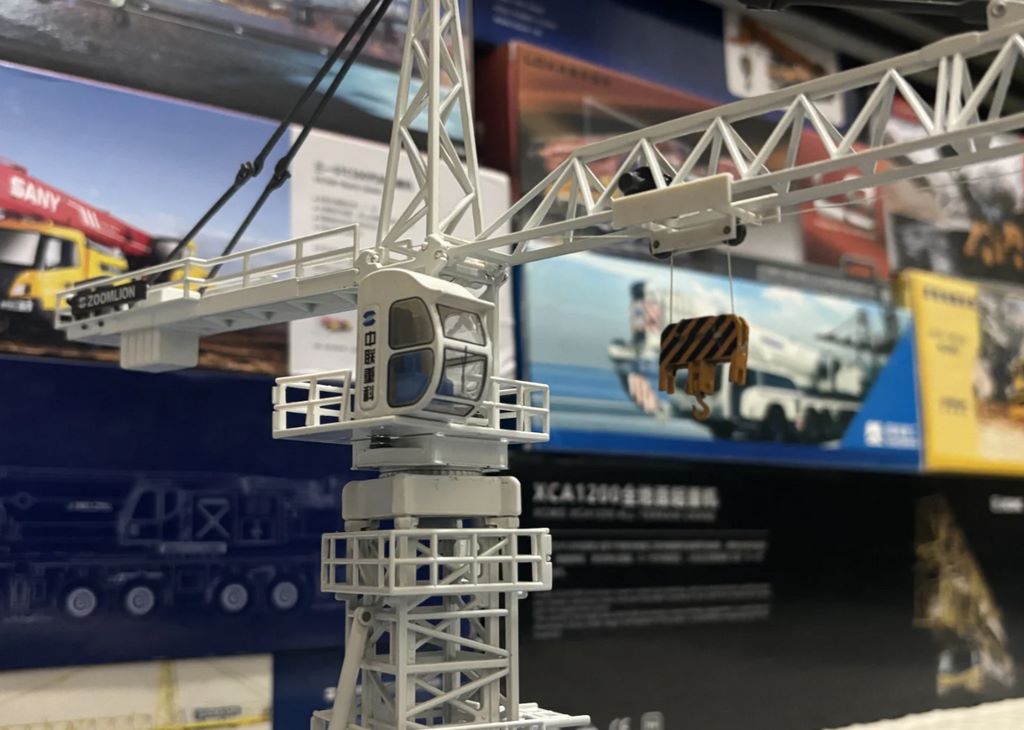
I. Manufacturing Process and Flow
3D Scanning and Data Modelling
A non-contact laser scanner is used to collect 1:1 data from the prototype crane, ensuring that the contour error of key structures (such as the boom, turntable, and outriggers) is ≤0.5mm.
Reverse engineering software is used to repair the scanned data, generating STL files suitable for CNC machining, while preserving industrial details such as weld seams and bolt holes.
Material Selection and Processing
Main Frame: Aerospace-grade 6061 aluminium alloy (2–3mm thick), formed via five-axis CNC milling, with chamfered edges to simulate real metal machining marks.
Moving parts: Nylon 12 (PA12) 3D-printed gear sets, undergo secondary oil immersion treatment to reduce friction noise and reproduce authentic gear meshing sounds.
Counterweight blocks: Zinc alloy die-cast components with sandblasted surfaces to mimic the granular texture of cast iron, with internal cavities pre-filled with lead pellets to balance the centre of gravity.
Assembly and debugging
A ‘modular pre-assembly’ strategy is adopted: the cab, boom, chassis, and other sub-modules are first completed independently, then assembled using pins for positioning to avoid cumulative tolerances.
During the motion testing phase, a 0.1mm feeler gauge is used to check gear clearance, and 100 manual lifting cycles are simulated to ensure no sticking occurs.
II. Surface Treatment and Coating
Base Treatment
Aluminium alloy components undergo alkaline washing and degreasing, followed by anodising (black/silver) to form a 0.01mm-thick oxide film, enhancing adhesion.
Plastic components are coated with PP primer (baked at 120°C for 20 minutes) to address paint peeling issues on nylon materials.
Layered Coating Process
Primer Layer: Epoxy grey primer (applied in two coats, film thickness 40μm), followed by sanding with 800-grit waterproof sandpaper to remove sagging after drying.
Topcoat Layer:
The main body is coated with engineering machinery-specific polyurethane paint (Pantone 426C standard yellow), applied via high-pressure airless spraying to achieve an orange peel texture.
Rust effect: Apply transparent rust solution (MiG Productions) in局部 spots, combined with a sponge dipped in red-brown enamel paint for dry brushing.
Logo restoration: Water-transfer decals printed with the company logo (vector-redrawn based on original vehicle photos), softened with a solvent-dipped cotton swab before clear coating to eliminate step edges.
Aging and protection
Hydraulic oil stain simulation: Enamel paint thinner + brown-black oil paint, applied along the oil pipe path, then blended with a fan brush dipped in white essential oil while still wet.


